About Us
FORGED BY DECADES, DEFINED BY INNOVATION
What makes Veneklasen Associates stand out
- Founders of Acoustical Engineering, Noise Control, Vibration Control & Audio/Video design.
- Regularly invited to present research papers and seminars globally.
- Industry resource with extensive field data and lab data for recommendations.
- Building research drives numerous innovative outcomes.
- Notable technology research includes aircraft noise reduction during WWII and aircraft hush house design.
Our Story
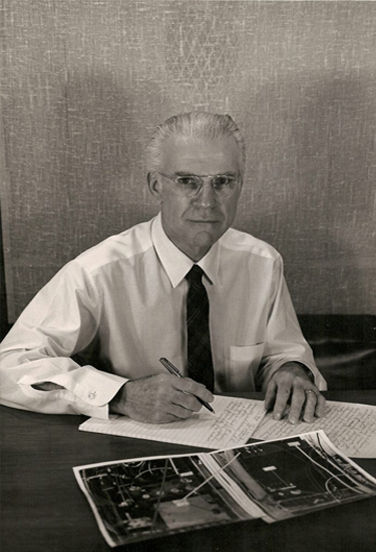
We proudly continue the legacy of excellence set by our founder Paul S. Veneklasen, a visionary in the acoustics field.
Paul S. Veneklasen
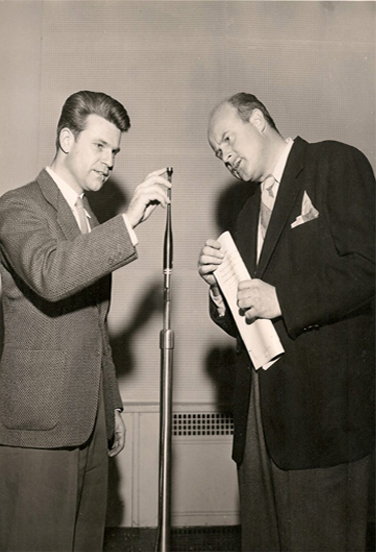
Established in 1938, our history commences with Paul S. Veneklasen's work at Harvard's Electro Acoustics Laboratory, interrupted by World War II. The wartime focus encompassed hearing protection, speech communication in noisy cockpits, and noise reduction in military aircraft. Acoustics, a nascent field, lacked precision tools, and properties of materials were uncharted territories. Paul, a pioneering acoustical physicist, founded Paul S. Veneklasen and Associates in 1947. Hailing from Grand Haven, Michigan, he held degrees from Northwestern University and UCLA, with patents for innovations safeguarding hearing. His influence reverberates through impactful acoustical and environmental solutions. Bolstered by innovation and unparalleled expertise, our organization swiftly gained a reputation as a top Acoustics Consulting firm globally.
Notable projects completed by our parent organization, Veneklasen Associates, encompass the LAX Tom Bradley Terminal, Haynes Generating Station, The Bloc in Downtown LA, Getty Center, Mondrian Hotel in Los Angeles, and various exemplary properties across industries. Renowned for exceptional acoustics, these spaces are hailed as world-class venues. Veneklasen Associates' comprehensive involvement in design and construction underscores their pivotal role.
Remaining faithful to our triumphant heritage, Veneklasen Associates perpetuates its esteemed reputation and core values, making a significant impact in the realm of Acoustics.
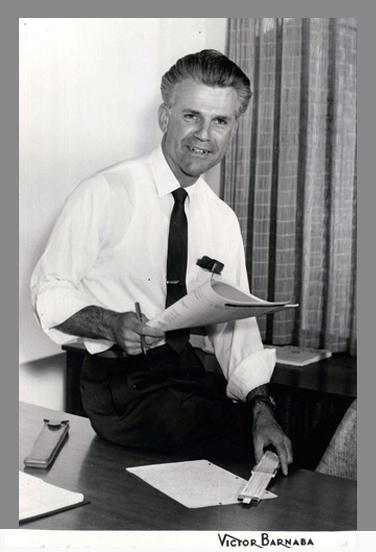
Visionaries shape the future, perceiving what's hidden from others and daring to actualize it. Their aspirations drive us to expand our horizons, elevate our ambitions, and forge a improved world. Acoustical design, the concealed science within architecture, bestows life upon buildings, distinguishing between lifeless and resonant spaces. Within this spectrum, the balance defines a space's distinctiveness and imparts its rightful essence.
Committed to Value & You
With decades of field and lab data guiding our recommendations, we stand as a crucial industry resource. Our extensive database, featuring over 50,000 tests, underscores our valuable expertise.
Our technology research spans from mitigating aircraft noise in WWII to post-war hush house design and modern lightweight aircraft fuselage design.
Our approach involves proactive, collaborative design through innovative, cost-effective services. This is rooted in academic preparation, resource development, and unwavering integrity.
We've authored 100+ research papers and are frequently invited to present prestigious research and seminars worldwide, showcasing our extensive knowledge and expertise.
We leverage cutting-edge analytical software to streamline repetitive tasks, freeing up time for us to focus our efforts on tackling complex opportunities.
Our building research led to enduring innovations: floating floors, acoustical door seals, low-frequency sound attenuators, and mechanical equipment vibration isolators, all still in use today.